
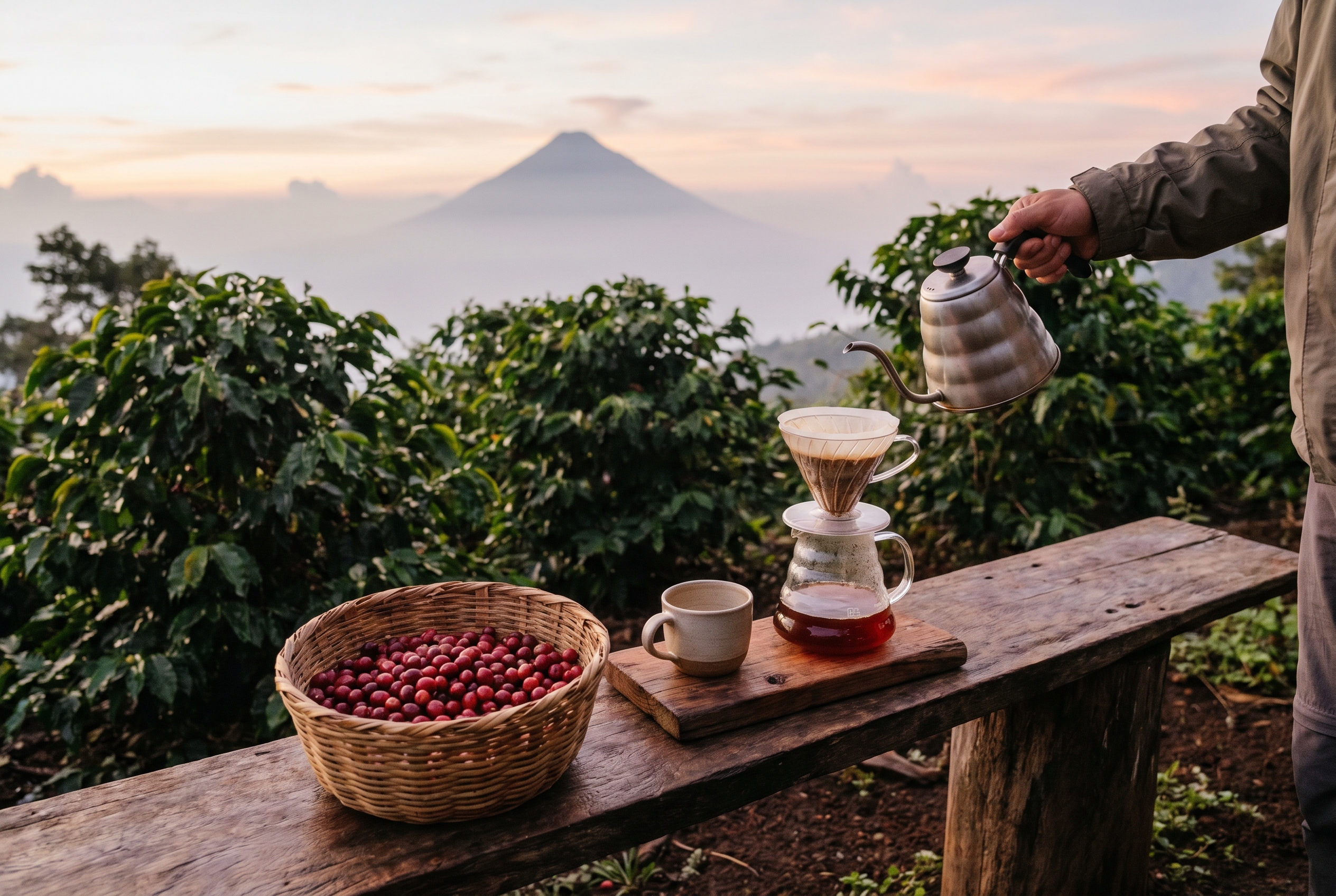
Why Guatemalan Coffee Feels Like the Most Versatile Origin in Specialty Coffee
23. april 2026 · 9 min lesing
Why Guatemalan Coffee Feels Like the Most Versatile Origin in Specialty Coffee
Guatemalan coffee has a rare talent: it can be the coffee that welcomes new drinkers, satisfies experienced specialty buyers, and still gives roasters something precise to work with. That is not a small thing. In a coffee world that often celebrates extremes — the fruit bombs, the wild fermentations, the competition lots that taste like they came from another planet — Guatemala wins by being deeply useful and quietly excellent.
For many people in the US, UK, and across Europe, Guatemalan coffee is the first single-origin coffee that really makes sense. It tastes familiar enough to trust, but distinct enough to feel like a step forward. It has structure. It has sweetness. It has clarity. And when it is grown and roasted well, it has the kind of depth that makes you stop after a sip and think, yes, that is exactly what good coffee should taste like.
That is why Guatemalan coffee keeps showing up on serious café menus and in home brewers’ rotation. It sits right in the sweet spot of specialty coffee: interesting without being inaccessible, expressive without being eccentric.
What makes Guatemala stand out
The first thing to know is that Guatemala is not one flavour. It is a landscape of flavours.
The country’s coffee grows at high elevations, often on volcanic soil, under conditions that slow cherry maturation and help build dense, flavourful beans. That density usually translates into a cup with better structure and more layered sweetness. In plain English: the coffee has time to develop properly before it is picked, and you can taste that patience in the cup.
This is one reason specialty coffee buyers talk about Guatemala so often. The origin consistently delivers coffee that is easy to read and easy to build around. It is not flashy in the way Ethiopian coffee can be, with its jasmine, bergamot, and blueberry lift. It is not as vivid and piercing as a great Kenyan. And it is not trying to be the same as Colombian coffee either, even though the two can share a similar sense of balance.
Guatemalan coffee tends to land somewhere more grounded: chocolate, caramel, citrus, nuts, red fruit, clean structure. It feels composed. That composure is exactly what makes it so versatile.
The coffee regions of Guatemala matter a lot
If you only remember one thing about Guatemalan coffee, remember this: region matters. A lot.
The coffee regions of Guatemala produce very different cups depending on altitude, rainfall, soil, and processing. That is where the origin becomes genuinely interesting.
Antigua
Antigua is probably the most famous name in the country’s coffee landscape. Coffees here often feel balanced, sweet, and polished, with cocoa, soft citrus, and a calm finish. If you want a classic specialty coffee profile that feels immediately reassuring, Antigua is a strong reference point.
Huehuetenango
Huehuetenango is often brighter and more dramatic. Coffees from here can show more fruit, more lift, and a little more tension. For drinkers who like a cup with a bit of energy, it is one of Guatemala’s most exciting regions.
Acatenango
Acatenango is shaped by volcanic terrain and high elevation, and that often shows up as clarity and structure in the cup. It can be a beautiful filter coffee region because it tends to reward clean brewing with a very precise result.
Atitlán
Around Lake Atitlán, the best coffees often feel elegant and lively, with tea-like sweetness and a refined acidity. It is the kind of origin expression that reminds you how much place can shape taste.
Cobán
Cobán often brings a cooler, wetter character to the story. The coffees can feel rounder, sometimes more herbal or gently earthy, and less bright than the highland classics. That matters because it proves Guatemala can do more than one style well.
This range is part of the country’s real value in specialty coffee culture. A roaster can choose a profile that leans classic and comforting, or one that pushes more floral or fruit-forward. A drinker can find a cup that fits a weekday routine or a more curious weekend brew.
Why it feels so at home in modern specialty coffee culture
Third-wave coffee has trained a lot of us to care about origin, processing, traceability, and flavour nuance. Guatemala fits that world very naturally.
It gives you a cup that can be explained clearly without needing a tasting wheel and a seminar. That’s important. Specialty coffee should be interesting, but it should also be legible. Guatemalan coffee often bridges the gap between “I just want a really good cup” and “I want to understand what this farm, region, and process are doing.”
It also tends to fit the way many cafés in the US, UK, and EU build menus. If Ethiopia is the bright, aromatic origin, and Kenya is the high-definition acid trip, Guatemala is often the origin that makes the menu feel grounded. It is the coffee that says: here is something elegant, clean, and dependable — but not boring.
That makes it valuable for direct trade coffee too. Direct trade is not a magic word; it only matters when it means real relationships, better communication, and better incentives for quality. Guatemala has become an important origin in that conversation because it offers coffees that reward attention at every step, from farm to roastery to brew bar.
What Guatemalan coffee usually tastes like
There is no single profile, but there is a family resemblance.
In a well-made washed Guatemalan coffee, you might taste:
- cocoa or dark chocolate
- caramel or brown sugar
- orange, apple, or stone fruit
- hazelnut or almond
- a medium body
- a clean, tidy finish
What makes the cup compelling is not just the notes themselves, but how they fit together. The sweetness keeps the acidity from feeling sharp. The body gives the coffee presence. The finish stays clean, which means you can drink it slowly without fatigue.
That combination is why Guatemalan coffee is such a strong recommendation for people who are just getting into single-origin coffee. It is expressive enough to teach you something, but stable enough not to confuse you.
A practical takeaway: what to taste for
If you brew a Guatemalan coffee this week, taste it in this order:
- sweetness first
- structure second
- acidity last
That sounds simple, but it helps you understand the origin better.
Ask yourself:
- Does it open with cocoa, caramel, or nutty sweetness?
- Does the cup feel round and balanced, or thin and sharp?
- Is the acidity citrusy, apple-like, or more like gentle stone fruit?
- Does the finish stay clean?
If the answers line up, you are probably tasting a well-grown, well-roasted coffee with real origin character.
How to brew Guatemalan coffee at home
Pour-over coffee is the best place to start. It tends to show the sweetness and structure without hiding the details.
A good starting recipe:
- ratio: 1:16
- water: 92–94°C
- grind: medium
- method: V60, Kalita, or another clean dripper
If the cup tastes hollow, grind a little finer. If it turns dry or sharp, go slightly coarser and reduce agitation. Guatemalan coffee usually gives clear feedback, which is one reason home brewers like it so much.
Espresso also works
This origin is not only for filter drinkers. Many Guatemalan coffees make excellent espresso, especially when the roast gives the beans enough development to support pressure and milk.
In espresso, you often get more chocolate, more body, and a sweeter, rounder profile. In milk drinks, that cocoa-and-caramel base can cut through beautifully without becoming harsh.
So if you want one simple home takeaway: brew it as pour-over first to understand the origin, then try it as espresso to see how the structure changes.
How it compares with Ethiopia, Colombia, and Kenya
Comparisons are only useful when they help you taste better.
Ethiopia is often more floral, tea-like, and aromatic. Guatemala is usually less explosive aromatically, but more grounded and structured.
Colombia often shares Guatemala’s balance, but can lean a little softer or brighter depending on the lot. Guatemala frequently brings a deeper cocoa tone and a firmer backbone.
Kenya is typically more electric, high-contrast, and sharply acidic. Guatemala is gentler and more versatile for people who want nuance without aggression.
That does not make Guatemala “less interesting.” It makes it more broadly useful. In a café setting, that matters. At home, it matters even more.
Food pairings that actually work
Because Guatemalan coffee is usually sweet, clean, and structured, it plays nicely with food that echoes those same traits.
Try it with:
- almond croissants
- dark chocolate
- orange cake
- cinnamon buns
- toast with jam
- hazelnut pastries
A good rule is simple: cocoa and citrus are your friends. If the coffee has chocolate and orange-like brightness, foods that lean into either one tend to work beautifully.
Why buyers keep coming back
Guatemalan coffee is one of those origins that roasters trust because it does the job with style.
It gives you reliability without sameness. It gives drinkers a cup that feels honest and complete. It gives cafés something that can appeal to both the curious novice and the seasoned filter nerd.
That is a powerful combination in modern specialty coffee. Some origins are thrilling but difficult. Others are smooth but forgettable. Guatemala usually sits in the rare middle: interesting, readable, and consistently good.
The takeaway
If you want one origin to teach you what balance looks like in specialty coffee, start with Guatemala.
Brew it as a clean pour-over, look for cocoa, caramel, and bright but gentle fruit, then compare it with an Ethiopian or Colombian coffee if you want to sharpen your palate. You will learn a lot, quickly.
Explore Guatemalan coffee with Kapalaj
If this made you want to taste the origin for yourself, explore Kapalaj’s Guatemalan coffees and subscribe for more specialty coffee guides, origin stories, and brewing tips.