
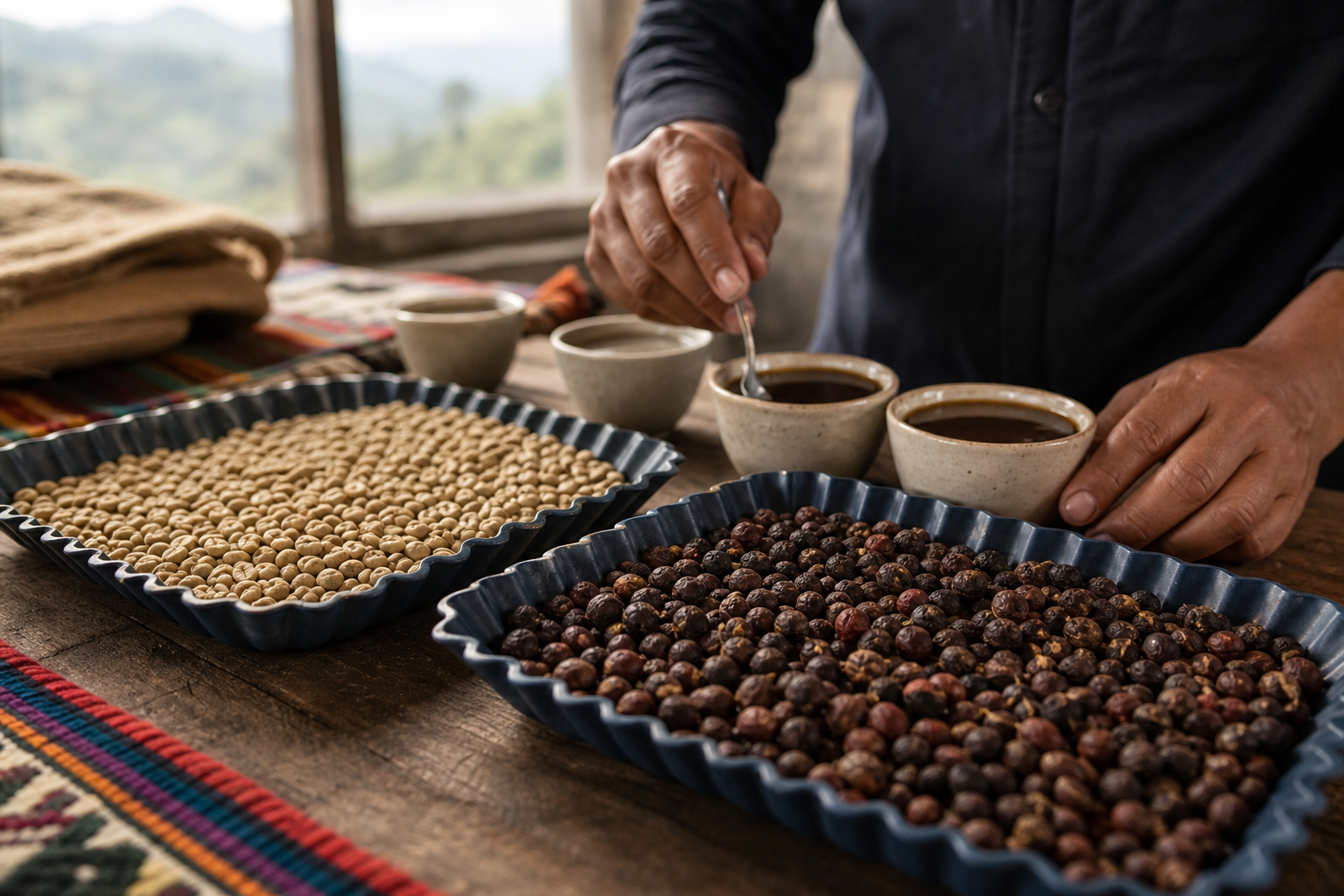
Washed or Natural? How to Choose Guatemalan Coffee for the Cup You Want
11. juni 2026 · 11 min lesing
Washed or Natural? How to Choose Guatemalan Coffee for the Cup You Want
The most useful question on a specialty coffee bag is not always the country name. Sometimes it is the small word beside it: washed, natural, honey, anaerobic, or another process note that tells you how the fruit was removed from the seed before drying.
For Guatemalan coffee, that word matters. Guatemala is already known among international specialty drinkers for coffees that can be sweet, structured, chocolate-toned, citrusy, floral, or fruit-forward depending on region, variety, altitude, roast, and producer style. Processing is the lens that can make those traits feel crisp and transparent, or rounder and more aromatic.
If you have ever bought a single-origin coffee because the tasting notes sounded exciting, then wondered why one Guatemala tasted like clean orange and cocoa while another leaned toward ripe berry and syrup, this guide is for you. Understanding washed and natural processing helps you choose the bag that fits your brew method, your palate, and the kind of cup you actually want to drink.
Direct answer: washed vs natural Guatemalan coffee
Washed Guatemalan coffee is usually the better choice when you want clarity, balance, citrus, cocoa, and a clean finish in pour-over coffee, batch brew, or a bright espresso. Natural Guatemalan coffee is often the better choice when you want more fruit aroma, heavier sweetness, and a rounder cup that can feel playful in filter coffee, espresso, or cold brew.
Processing does not replace origin. A natural from Guatemala will not taste exactly like a natural Ethiopian coffee, and a washed Guatemala will not become Colombian simply because it is clean. Process changes how the coffee’s fruit, fermentation, sweetness, acidity, and texture are expressed.
Why processing has become a buying cue
In third-wave coffee culture across the US, UK, EU, and Nordics, drinkers have become more comfortable reading coffee bags like wine labels: origin, region, variety, process, roast date, and producer. That shift is not just aesthetic. CBI’s research on the European specialty coffee market highlights the growing importance of traceability, origin stories, and differentiated taste experiences, especially in cafés and other out-of-home settings.
For buyers, processing is one of the easiest details to connect with flavor. “Washed” suggests a cleaner cup where acidity and origin structure are easier to read. “Natural” suggests more fruit influence from the whole coffee cherry during drying. Neither is automatically better. The smarter question is: better for what?
Specialty coffee also relies on shared evaluation language. The Specialty Coffee Association’s standards help create common reference points for cupping, brewing, and sensory assessment. You do not need to become a certified judge to enjoy your morning coffee, but the same idea applies at home: compare two coffees with a consistent method, and processing differences become much easier to taste.
What “washed” means in plain English
Washed coffee is coffee where the fruit is removed before the seed is dried. In practice, ripe cherries are depulped, the sticky mucilage around the seed is broken down through fermentation or mechanical removal, and the coffee is washed clean before drying.
The result is often described as clean, bright, and transparent. “Clean” does not mean boring. It means the cup has fewer heavy fermented or dried-fruit flavors getting in the way, so you can notice the coffee’s acidity, sweetness, and structure more clearly.
In Guatemalan coffee, washed processing can highlight classic specialty traits: cocoa, caramel, orange, red apple, stone fruit, almond, gentle florals, and a crisp finish. Compared with many Brazilian coffees, which often lean lower-acid and nutty, a washed Guatemala can feel more lifted. Compared with a high-acid Kenyan coffee, it may feel softer and rounder, with sweetness acting as a bridge between brightness and body.
Washed Guatemala is often a safe first choice if you are buying for a Chemex, V60, Kalita, automatic filter brewer, or a daily espresso recipe where you want sweetness without too much funk.
What “natural” means in plain English
Natural coffee is dried with the coffee cherry still around the seed. Instead of removing the fruit early, producers dry the whole cherry carefully on patios, raised beds, or other drying surfaces, turning and monitoring it to control moisture and fermentation.
Because the seed spends more time inside the fruit, natural coffees can develop more intense aromas: berry, tropical fruit, winey notes, dried cherry, chocolate liqueur, or a jam-like sweetness. In a well-made natural, those flavors feel clean and integrated. In a poor one, they can taste over-fermented, boozy, or muddy.
Natural Guatemalan coffee can be especially interesting because Guatemala’s baseline profile often has enough chocolate and structure to keep fruitiness grounded. Where a natural Ethiopian coffee might race toward blueberry, florals, and tea-like aromatics, a natural Guatemala may feel more like red fruit over cocoa, or ripe stone fruit with brown sugar. That makes it useful for drinkers who want fruit character without losing comfort.
For cold brew, natural Guatemala can be generous and aromatic. For espresso, it can be beautiful but needs careful dialing-in because heavier fruit sweetness can become sharp or boozy if extraction runs too fast or the roast is too light for your setup.
Guatemala is not one flavor profile
One reason processing is so powerful in Guatemala is that the origin itself is diverse. Guatemalan Coffees / Anacafé identifies multiple regional profiles, including Antigua, Highland Huehue, Acatenango Valley, Traditional Atitlán, Fraijanes Plateau, Rainforest Cobán, New Oriente, and Volcanic San Marcos. Each region has its own mix of altitude, microclimate, soil, rainfall, and producer tradition.
That means “washed Guatemala” is not a single taste. A washed Huehuetenango may show bright fruit, florals, and lively acidity. A washed Antigua may feel deeper, cocoa-toned, structured, and spicy. A washed Cobán may be softer and more humid-climate influenced. The same is true for naturals: process adds a direction, but the region still matters.
This is why traceability matters. A bag that tells you country, region, producer or group, process, and roast date gives you more than romance; it gives you clues. If you enjoyed a washed Guatemalan coffee from Huehuetenango, your next best purchase may not be “any Guatemala” but another clean, high-altitude lot with similar structure.
A practical choosing guide
Use this as a quick buying filter when comparing Guatemalan coffee bags.
| If you want... | Choose... | Why it works |
|---|---|---|
| A crisp morning pour-over | Washed Guatemala | Cleaner acidity, clearer citrus, cocoa, and sweetness |
| A comfortable everyday filter coffee | Washed or honey Guatemala | Balance, medium body, approachable flavor |
| A fruit-forward weekend brew | Natural Guatemala | More aroma, ripe fruit, syrupy sweetness |
| Espresso for milk drinks | Washed Guatemala with chocolate/caramel notes | Structure and sweetness cut through milk |
| Espresso as a standalone drink | Washed or carefully roasted natural Guatemala | Washed gives clarity; natural gives more fruit and texture |
| Cold brew without flatness | Natural or sweet washed Guatemala | Natural adds aroma; washed keeps the finish clean |
| A gift for someone new to specialty coffee | Washed Guatemala | Less polarising, easy to brew, still distinctive |
The key is to match process to context. A natural coffee that tastes exciting in a small tasting cup may be too loud as your every-morning office batch brew. A washed coffee that feels simple beside an experimental anaerobic lot may become the bag you finish first because it stays balanced across brew methods.
How to taste the difference at home
You do not need a cupping lab to learn this. Brew two Guatemalan coffees side by side if you can: one washed, one natural. Keep the recipe simple and consistent.
For pour-over coffee, try this starting point:
- 15g coffee
- 250g water
- Medium-fine grind
- Water just off boil, around 92–96°C if you have temperature control
- 45g bloom for 30–40 seconds, then pour in two or three steady pulses
- Aim for a total brew time around 2:45–3:30, adjusting by taste
Taste first while hot, then again as the coffee cools. Washed coffees often become more articulate as they cool: citrus, apple, cocoa, tea-like clarity. Naturals often become more aromatic: berry, dried fruit, wine, chocolate, or tropical sweetness. If the washed cup tastes sour and thin, grind finer or extend contact time. If the natural tastes heavy or boozy, grind slightly coarser, lower the dose a touch, or brew with a little less agitation.
A simple sensory exercise: write down three words for aroma, three for sweetness, and one for finish. Do not chase official tasting notes. Your own pattern recognition is more useful than memorising someone else’s vocabulary.
How Guatemala compares with Colombia, Ethiopia, and Kenya
Comparisons are useful when they sharpen expectations.
Colombian coffee often shares Guatemala’s reputation for balance, sweetness, and broad brew-method flexibility. If you like washed Colombian coffees for caramel, red fruit, and clean structure, washed Guatemalan coffee is a natural next step, often with more cocoa, spice, or volcanic depth depending on the region.
Ethiopian coffee, especially washed or natural lots from high-altitude regions, can be more floral, tea-like, or intensely berry-driven. Guatemala usually feels more grounded. That makes it attractive for drinkers who enjoy origin character but still want a cup that pairs with breakfast, milk, or a second mug.
Kenyan coffee is famous for vivid acidity, blackcurrant-like fruit, and a powerful structure. A bright washed Guatemala may share some lift, but it usually lands softer and sweeter. For many home brewers, that makes Guatemala easier to drink daily while still feeling unmistakably specialty.
What to ask before buying
When a roaster, café, or online shop lists Guatemalan coffee, ask questions that connect process to use:
- Is this washed, natural, honey, or another process?
- Which region or producer is it from?
- Is the roast designed more for filter, espresso, or both?
- What is the roast date?
- Are the tasting notes clean and specific, or vague and generic?
- Does the coffee have enough traceability to tell you why it tastes the way it does?
This is also where direct trade coffee and long-term sourcing relationships matter. Direct trade simply means the roaster has a more direct buying relationship with producers or exporters than anonymous commodity buying. It is not a regulated certification, so details matter. But when done well, it can support better communication about processing, quality, freshness, and the producer’s work behind the cup.
FAQ
Is washed or natural Guatemalan coffee better?
Neither is universally better. Washed Guatemalan coffee is usually cleaner, brighter, and easier to brew consistently. Natural Guatemalan coffee is usually fruitier, more aromatic, and more expressive, but it can be more polarising.
Is Guatemalan coffee good for pour-over?
Yes. Guatemalan coffee is often excellent for pour-over because many lots combine sweetness, balanced acidity, and enough structure to stay clear as the cup cools. Washed lots are especially reliable for V60, Kalita, Chemex, and similar brewers.
What does natural Guatemalan coffee taste like?
A good natural Guatemalan coffee may taste like red fruit, ripe cherry, berry, chocolate, brown sugar, or dried fruit. Compared with natural Ethiopian coffee, it often feels rounder and more cocoa-toned.
What does washed Guatemalan coffee taste like?
A washed Guatemalan coffee often tastes clean and balanced, with notes such as cocoa, caramel, citrus, apple, stone fruit, almond, or gentle florals. Region and roast level still shape the final cup.
Which Guatemalan coffee should I buy first?
If you are new to single-origin coffee, start with a washed Guatemalan coffee from a roaster that gives clear region, process, roast date, and brew guidance. If you already enjoy fruity coffees, try a natural Guatemala next and compare them side by side.
The takeaway: process is a promise of direction, not a guarantee
Washed and natural are not quality rankings. They are choices made at origin, shaped by climate, infrastructure, producer skill, drying conditions, roast, and brewing. In Guatemala, those choices can reveal two different sides of the same origin: one clean, structured, and transparent; the other fruit-forward, aromatic, and generous.
The best way to choose is simple. If you want clarity and daily drinkability, reach for washed Guatemalan coffee. If you want fruit, aroma, and a little more adventure, choose natural. If you want to understand both, brew them side by side and let the cups teach you.
Explore Kapalaj’s Guatemalan coffees in our shop, or learn more about the people and regions behind the cup on our origin page.